

The Pioneer's Manuscript: Fieldnotes 002

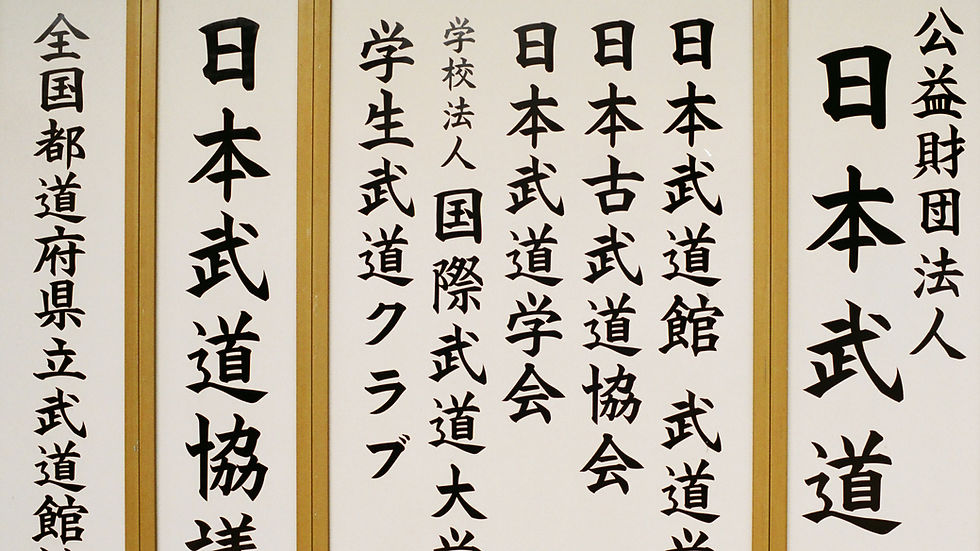
Fieldnotes is a report giving a first hand account about the progress of The Pioneer’s Manuscript. In case you missed Fieldnotes 001, The Pioneer’s Manuscript documents Black pioneers of the past, highlights present-day Black and Japanese partnerships, and works towards creating the next generation of pioneers by laying the foundation for Dayton, Ohio’s first transnational mentorship program.
Blue Notes and Tunisia Nights

I hesitate to dive headfirst into jazz and Japan without first providing a bit of historical context. Until 1854, Japan maintained a policy of isolation that severely restricted foreign contact. This began to change following negotiations led by Commodore Matthew Perry. Later in 1858 through the Harris Treaty, several Japanese ports opened up to international trade. As foreign settlements developed in cities such as Yokohama, merchants, sailors, and expatriates introduced new cultural influences, including music from abroad.
As jazz emerged in the United States during the early twentieth century, records, sheet music, and dance culture gradually made their way to Japan. The genre's popularity grew through dance halls, imported recordings, and performances by Filipino musicians who played American popular music throughout East Asia. Long before many African American jazz artists set foot in Japan, Japanese audiences had already become familiar with the sounds of jazz. As I continue to do research, there may have been lesser known pioneers who performed in Japan but one of the first major internationally recognized jazz artists is Louis Armstrong who toured Japan in 1953.

For this edition of Fieldnotes, I will focus on Art Blakey. Widely regarded as one of the greatest drummers in jazz history, Blakey was known for his explosive style, powerful rhythms, and ability to elevate the musicians around him. As leader of the Jazz Messengers, he helped define the hard bop movement while mentoring generations of influential artists.
By the time Blakey first arrived in Japan in 1961, jazz had already established a foothold within the country. Performing at Hibiya Public Hall in Tokyo, he quickly found an audience that deeply appreciated both his music and the broader jazz tradition. His relationship with Japan would continue for decades through tours, recordings, and personal connections. In 1963, the Jazz Messengers recorded the composition "Ugetsu" (雨月), a work inspired by Japan that reflected the growing artistic exchange between Blakey and Japanese audiences. Blakey would return to Japan numerous times, including in 1979 when he recorded A Night in Tunisia at Victor Studio, pictured above.
When visiting sites connected to pioneers, I often try to heighten my awareness through intentional reflection. Sitting on a bench near Victor Studio, I listened to A Night in Tunisia and took a few moments to appreciate the path Blakey had traveled before me. After pouring a small amount of my vitamin C drink onto the ground in his honor, I began photographing the area.
Feeling courageous, I entered the studio lobby and asked if I might be able to tour the facility. While I knew the interior had likely changed since Blakey's visits, the chance to stand in the same place where he once worked felt meaningful. The doorman and sound engineer listened patiently as I explained The Pioneer’s Manuscript in Japanese. Although I was unable to secure a tour that day, they kindly allowed me to photograph Nipper, the iconic dog associated with the Victor brand and the "His Master's Voice" trademark.
As I stood in the lobby, I felt a familiar sensation I experienced while visiting the site where Josephine Baker performed in Kyoto. There was an unmistakable sense of history, prestige, and creative achievement. Once again, I found myself walking in the footsteps of a giant.

As I continue to work on The Pioneer’s Manuscript, I’ve learned that partnerships take many forms. In the case of Art Blakey, one such partnership emerged through his marriage to Atsuko Nakamura in 1968. Together they built a family, traveled internationally, and raised three children, creating a connection between Black America and Japan that extended far beyond music. Although I cannot speak for Blakey himself, their relationship challenges conventional ideas of where home begins and ends. It serves as a reminder that cultural exchange is not limited to performances, diplomacy, or artistic collaboration. Sometimes it takes shape through the relationships we build and the families we create.
Intentional Movement: Concrete Jungle Meets Tradition
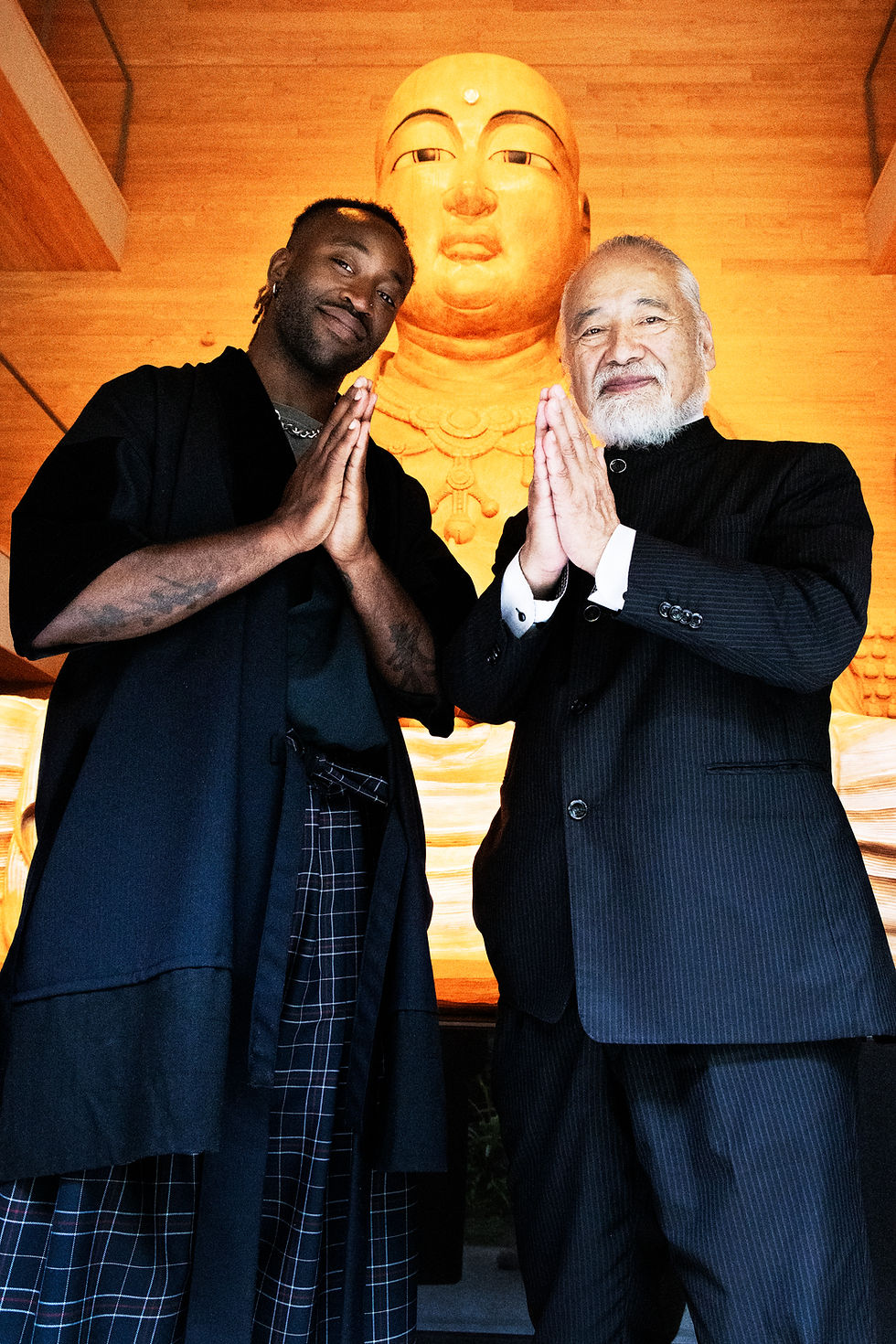
Zane, also known as GZO, is a fashion designer and experience creator from Brooklyn who is now based in Osaka. His story is unique because he has built a practice that bridges contemporary streetwear culture with traditional Japanese aesthetics. Through both fashion and a genuine curiosity about Japanese culture, he has formed relationships with groups such as the Yamabushi, mountain ascetics who pursue spiritual enlightenment through rigorous training and communion with nature. For our session, we created photographs at Toji Temple, a place where Zane frequently collaborates to provide visitors with authentic cultural experiences. One of those experiences is calligraphy, a discipline he has studied extensively under his teacher and featured partner, Maehara-san.
Maehara-san is no stranger to exploration himself. Having spent years traveling across America by motorcycle, he describes his journey as living a "free life." This resonated with me deeply, as freedom remains one of my core values. What I admire most about the relationship between Zane and Maehara-san is the mutual respect they share. Although there are differences in age, nationality, and life experience, they have built a partnership rooted in curiosity, trust, and a willingness to learn from one another.
One lesson I have taken away from each pioneer I have interviewed is a new tool for navigating life. From Zane, that lesson was intentionality. Whether through fashion, cultural exchange, or the deliberate practice of calligraphy, he has shown me the value of being fully present in the moment. In a world increasingly driven by distraction and constant stimulation, intentionality has become a rare skill. If we are unable to direct our attention, how can we hope to direct our lives? Like a ship without a captain, it becomes difficult to determine not only where we are going, but why we set sail in the first place. Watching Zane stay intentional in his practice, I sensed a level of peace around him. As I move forward, I want my own movement through life to be more intentional.
A Musical Bridge

One key element you may have noticed throughout The Pioneer’s Manuscript is that it highlights partnerships in addition to individual stories. In the last edition of Fieldnotes, I introduced J’Nique, an internationally acclaimed singer-songwriter. Today, I would like to highlight her partner, Emi Evans.
Emi is a singer and lyricist who has contributed to projects such as the NieR and Dark Souls video game series, as well as the animated series Star Wars: Visions. J’Nique’s mother initially introduced the two at a performance where they were both singing. Later, Emi remembered J’Nique’s beautiful voice and recommended her for an opportunity to sing on the NieR series. What began as a professional connection grew into a sister-like friendship that has now lasted for more than a decade. Whether talking on the phone, singing together, or simply spending time together, the two have remained a consistent presence in each other’s lives.
During our interview, Emi recalled countless moments shared after performances, both in Japan and abroad. Sometimes they would visit a restaurant, listen to other musicians perform, or simply take a walk through a nearby park. Through a relationship built on trust, shared experiences, and genuine curiosity, Emi’s understanding of African American culture expanded in meaningful ways.
Reflecting on the interview, what stood out most to me were the international experiences Emi and J’Nique shared together. There is something unique about navigating an unfamiliar place alongside another person. In those moments, differences in nationality, race, language, and background often take a back seat to the shared experience of discovery. Listening to Emi describe their travels, I found myself thinking that some of the strongest partnerships are forged in these in-between spaces and everyday moments lived together. Perhaps that is why their friendship has endured for more than a decade. It was built not only through music, but through a shared journey of exploring the world together.
New Adventures Mentoring

One of the long-term goals of The Pioneer’s Manuscript is to help cultivate the next generation of pioneers through the New Adventures Mentoring Program. Designed for underprivileged youth, the program will connect students with both local mentors in Dayton and international mentors such as Zane and Maehara-san. In addition to one-on-one mentorship, participants will engage in virtual group experiences with members of the Japanese community, receive assistance obtaining passports, and conclude the program by presenting projects completed throughout the mentorship experience at a live celebration event.
During our June 9th planning meeting, we focused on three primary areas: fundraising strategy, organizational structure, and the continued development of our policies and procedures. On the organizational side, we reviewed mentor and mentee role descriptions, program expectations, and success metrics.
Thanks to the hard work of our project manager, Angelica Clark, as well as guidance from the Dayton Mentoring Collaborative, we also continued refining our comprehensive policies and procedures manual. While much of this work takes place behind the scenes, it is essential to creating a safe, effective, and sustainable program. Our next meeting will be held in person, where we will focus on orientation procedures for both mentors and mentees as we continue laying the foundation for the program's launch.
Closing Reflection
As I continue working on The Pioneer’s Manuscript, I am learning the power of not only representation and rediscovering forgotten histories, but also knowledge itself. Through each person I meet, I feel like I gain a new tool for navigating life. Earlier in this edition, I spoke about intentionality as a tool I learned from Zane. Yesterday I picked up another tool, one that has always been close to my heart but not consciously recognized: the combination of equity and action.
I have always been drawn to inspirational stories and representation. Seeing someone who looks like you accomplish something extraordinary can expand your understanding of what is possible. However, inspiration alone is only one piece of the puzzle. If we truly want to create equity, we must also be willing to open doors for others when we have the ability to do so. At some point I found myself asking, "Why?" The answer was surprisingly simple. Our time on this earth is finite, and I want other people to experience the world and the opportunities it contains. I have reached a point in my life where I struggle to understand the purpose of gatekeeping. There is so much more to life than the superficial things that often consume our attention, and everyone deserves the opportunity to pursue their own version of fulfillment.
Have you ever read The Alchemist by Paulo Coelho? Without spoiling the story, it is a book about pursuing one's deepest aspirations and the challenges that accompany that journey. More than anything, I want others to know that such a journey exists. If The Pioneer’s Manuscript can help even one person realize that there is a larger world waiting beyond the boundaries they have been given, then this work will have been worth it.

Although significant progress is being made, we are currently still approximately $19,000 short of the projected budget. Please consider supporting the project here: National Association for Black Engagement With Asia Donation Page and selecting “The Pioneer’s Manuscript” as the designation.
Special thanks to the many individuals supporting this project behind the scenes. Numerous people have generously donated their time and expertise to help move this work forward through video editing, localization efforts, archival support, mentorship development, and more. If you are interested in following daily fieldwork updates from The Pioneer’s Manuscript, I will be sharing stories regularly on Instagram at @truhiro.
This project is supported by the United States-Japan Foundation through the National Association for Black Engagement With Asia.
Camera equipment for the project was provided by Midwest Photo.


Comments